



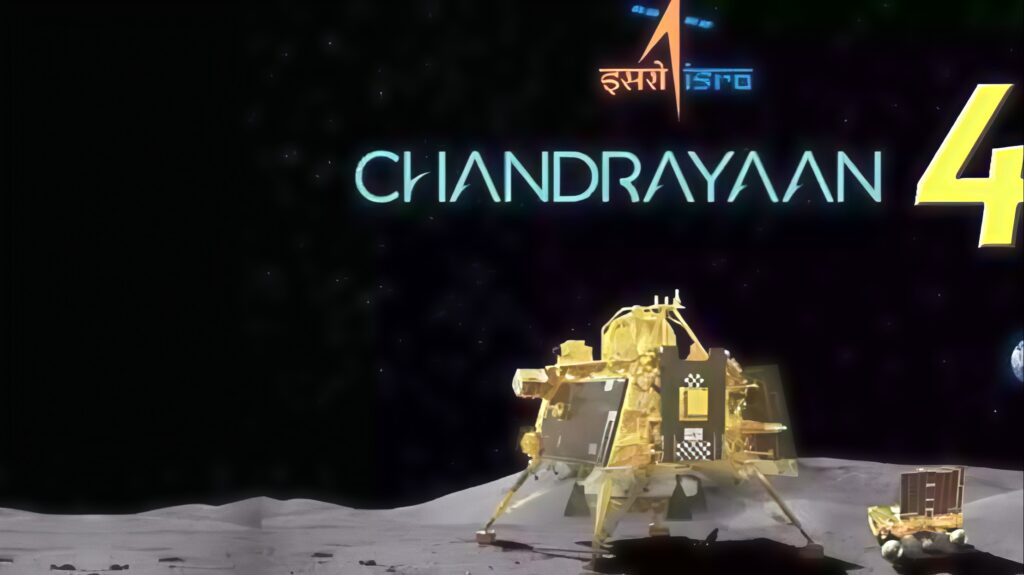
India’s space journey has captured the imagination of millions across the world. After the historic success of Chandrayaan-3 in 2023, which made India the first nation to land near the Moon’s south pole, the Indian Space Research Organisation (ISRO) has set its eyes on an even more ambitious project — Chandrayaan-4. This mission is expected to be India’s most complex lunar project yet, with the primary goal of bringing back rock and soil samples from the Moon.
Learning from Chandrayaan-3
Chandrayaan-3 was a landmark achievement. Its lander, Vikram, and rover, Pragyan, successfully operated on the Moon’s surface and sent back valuable data. While Chandrayaan-3 proved India’s capability in soft landing technology, it did not attempt a sample-return mission. That is where Chandrayaan-4 comes into the picture.
ISRO scientists have carefully studied the challenges faced by previous missions and are now preparing a more advanced spacecraft. The success of Chandrayaan-3 has provided confidence and technical insights which will play a crucial role in shaping the Chandrayaan-4 mission.
The Objective: Bringing the Moon Home
The biggest aim of Chandrayaan-4 is sample return. If successful, India will join an elite group of countries, such as the United States, Russia, and China, that have managed to bring back material from the Moon. These samples will help scientists unlock secrets about the Moon’s origin, its geological history, and its mineral resources.
Moon rocks and soil contain clues about the early solar system, and analyzing them on Earth with advanced instruments will provide insights that cannot be achieved through remote sensing alone.
Mission Design and Technology
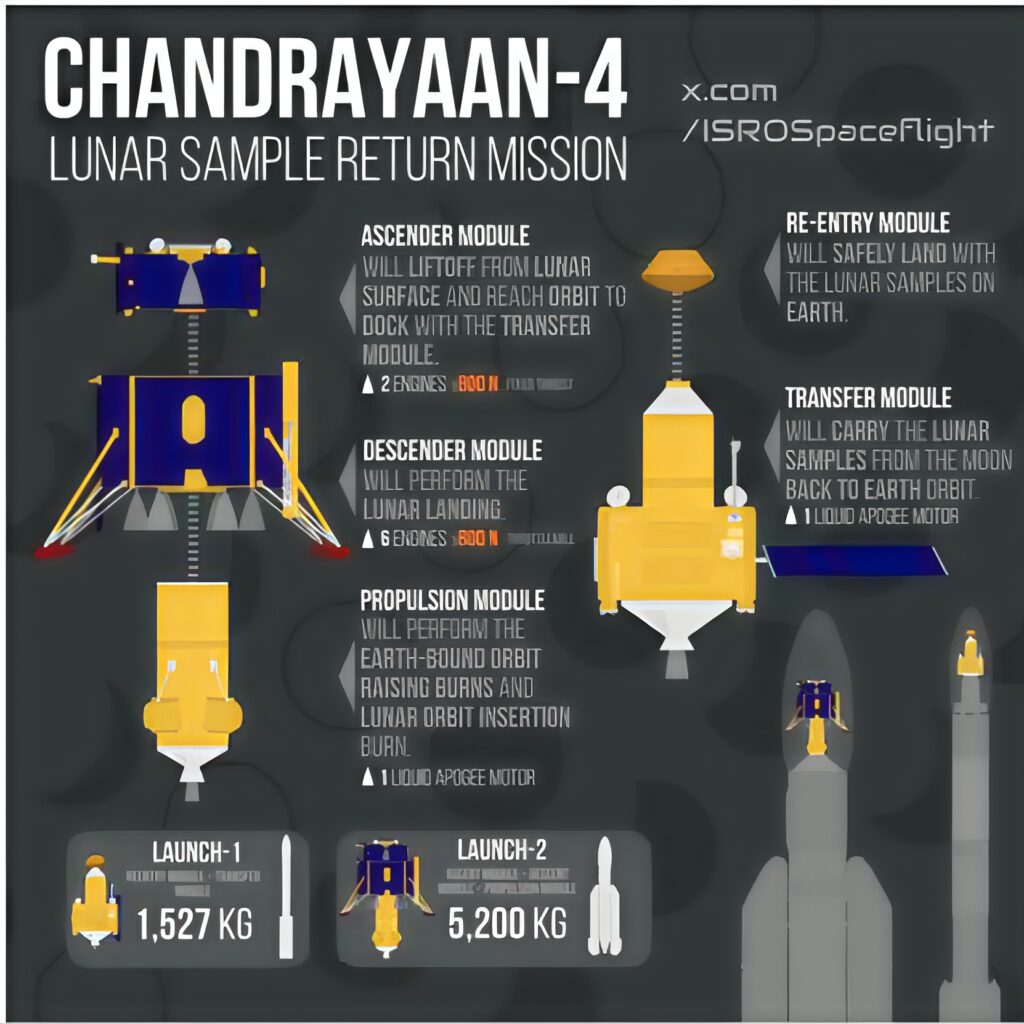
Chandrayaan-4 is expected to be a multi-module mission. According to early reports, it may consist of:
- An Orbiter – to circle the Moon and relay communication.
- A Lander – to safely touch down on the lunar surface.
- A Rover – to collect samples from the Moon’s surface.
- An Ascent Module – to carry the samples from the Moon’s surface back to lunar orbit.
- A Return Module – to bring the collected material safely back to Earth.
This complex structure makes Chandrayaan-4 one of the most challenging space projects ISRO has ever attempted. It requires perfect coordination, advanced navigation, and high precision.
Timeline and Expectations
Though ISRO has not confirmed an exact launch date, Chandrayaan-4 is expected to be launched by 2027 if all tests go as planned. Recently, ISRO announced that it has successfully tested key propulsion systems that will be used in the mission. These tests are a major step forward in making the dream of a sample-return mission a reality.
The mission will likely use India’s most powerful rocket, the LVM3 (Launch Vehicle Mark-3), also known as GSLV Mk-III, which has already been proven in previous missions, including Chandrayaan-2, Chandrayaan-3, and the Gaganyaan preparations.
Importance for India and the World
Chandrayaan-4 is not just about space science — it also represents India’s growing strength in technology, research, and international collaboration. Bringing lunar samples back to Earth will open new opportunities in scientific research, planetary studies, and even future human exploration of the Moon.
Globally, space agencies are working toward building permanent lunar bases and using the Moon as a stepping stone for missions to Mars. India’s participation through Chandrayaan-4 will ensure that it plays a leading role in this new era of space exploration.
Challenges Ahead
A mission of this scale is not without challenges. The main difficulty lies in collecting samples, launching them back from the Moon, and ensuring they return safely to Earth. Even small technical errors can affect the mission’s success. Additionally, the mission requires new technologies, such as automated drilling, precise navigation, and safe re-entry of the return capsule into Earth’s atmosphere.
Despite these challenges, ISRO’s track record of innovation and resilience gives hope that Chandrayaan-4 will achieve its goals.
Conclusion
Chandrayaan-4 represents the next giant leap for India’s space program. From demonstrating soft landing with Chandrayaan-3 to attempting a sample-return mission, India is rapidly moving ahead in global space exploration. If successful, the mission will not only enhance our understanding of the Moon but also inspire future generations of scientists, engineers, and dreamers.
As the countdown begins for Chandrayaan-4, one thing is clear: India’s space journey is just getting started, and the Moon may soon bring a piece of itself back home to Earth through the hands of Indian science.

Nich