



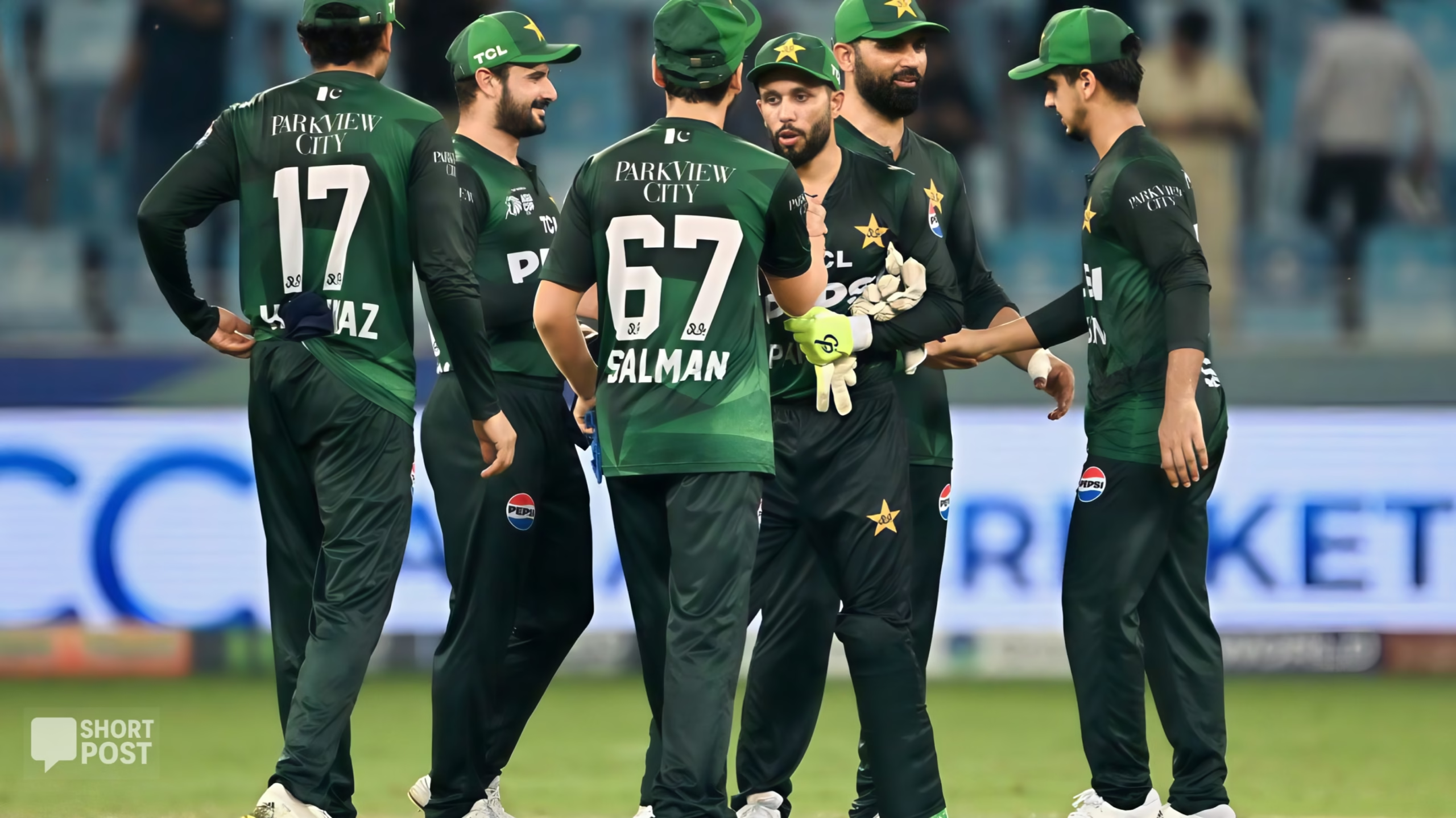
The Asia Cup 2025 has so far been a tournament of mixed emotions for Pakistan. Their 41-run victory over the United Arab Emirates in Dubai on September 17 confirmed their progress into the Super Four stage, but the match was overshadowed by a storm of controversies off the field. What should have been a routine fixture against a rising Associate nation turned into a symbol of how fragile cricket administration and diplomacy can be in South Asia.
The Handshake Controversy
The drama began during Pakistan’s high-voltage clash against India on September 14. At the toss, reports emerged that ICC match referee Andy Pycroft instructed both captains—Pakistan’s Salman Agha and India’s Suryakumar Yadav—to skip the customary handshake. Matters escalated further when, after India’s win, Indian players and staff left the field without the traditional post-match handshake with Pakistan’s squad. Even more galling to Pakistan’s camp, video clips showed Indian players shutting their dressing room doors as the opposition walked by.
For the Pakistan Cricket Board (PCB), this was not just a missed formality. It was interpreted as a violation of sportsmanship and a breach of cricket’s traditions. The PCB swiftly lodged a formal complaint, demanding Pycroft’s removal from officiating Pakistan’s future matches in the tournament. The board argued that the referee’s role is to uphold the spirit of the game, not to erode it.
PCB vs ICC: Escalating Tensions
By the time Pakistan’s fixture against UAE arrived, the issue had become a standoff. The PCB was adamant that action must be taken against Pycroft, while the ICC initially resisted, emphasizing continuity and protocol. Behind closed doors, heated exchanges reportedly took place. The PCB hinted at boycotting the match if its concerns were not addressed, leaving fans and broadcasters anxious about whether the game would even go ahead.
For the ICC, this was a test of neutrality. Removing an official mid-tournament could set an uncomfortable precedent. Yet failing to respond risked alienating one of its most influential members. Caught in this bind, the governing body tried to defuse the situation through dialogue rather than punishment.
Match Day Drama in Dubai
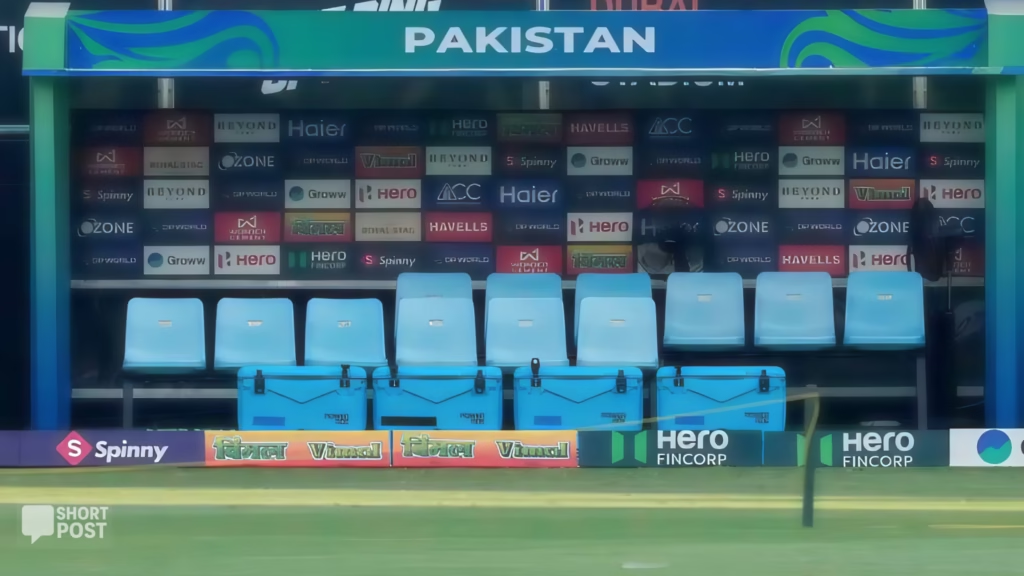
The match against UAE was scheduled to start at 6:30 pm local time, but when the broadcast cameras panned across the Dubai International Stadium, Pakistan’s dugout was conspicuously empty. The players had not boarded the bus from their hotel as negotiations with ICC officials continued. Speculation of a boycott spread rapidly on social media, with hashtags like #BoycottAsiaCup trending in Pakistan.
Eventually, ICC General Manager Wasim Khan stepped in to mediate between Pycroft and the PCB. A closed-door meeting resulted in a compromise: Pycroft issued a formal apology, describing the handshake incident as a “miscommunication.” The ICC also promised to conduct a review after the tournament. Minutes later, the PCB released a video statement confirming the agreement. Pakistan’s players finally arrived at the stadium, and the match began an hour late at 7:30 pm.
On the Pitch: A Hard-Fought Win
Once the cricket finally got underway, Pakistan found themselves in a battle they might not have expected. Batting first, their top order struggled to build momentum. Fakhar Zaman was the only batsman to cross 30 runs, while the rest fell cheaply. The team was bowled out with nine wickets down, raising fresh questions about the fragility of Pakistan’s batting lineup. Critics pointed out that against stronger opposition, such performances could prove fatal.
But if Pakistan’s batting faltered, their bowling stood tall. Haris Rauf, spearheading the pace attack, ripped through the UAE batting order with pace and discipline. Supported by Shaheen Afridi and spinners who tightened the screws, Pakistan secured a 41-run victory. The result ensured their progression to the Super Four, but it was not the emphatic performance fans had hoped for.
Haris Rauf: “The Board’s Headache, Not Mine”
In the post-match press conference, Haris Rauf was asked whether the off-field controversy had distracted the team. His response was blunt and refreshing: “I wasn’t feeling any pressure. This is not in my control. These are decisions for the board; it’s their headache. For me, I had to play the match. My focus was on that. The management handled things pretty well.”
Rauf’s remarks highlighted a divide between administrative squabbles and player responsibilities. While boards fight their battles in boardrooms, players must concentrate on delivering on the field. Rauf also dismissed comparisons with the 2017 Champions Trophy-winning squad, insisting that team-building and planning were matters for selectors and coaches, not him.
Cricket and Politics: An Uneasy Mix
The incident revealed an uncomfortable reality: cricket in South Asia can rarely be separated from politics. A missed handshake—seemingly a minor issue—became a flashpoint in one of sport’s fiercest rivalries. For the PCB, it was a matter of dignity and respect. For the ICC, it was a matter of authority and precedent. For the players, it was a distraction they could do little about.
Such controversies underline how deeply cricket is woven into national identity in Pakistan and India. What might be dismissed elsewhere as protocol takes on symbolic weight in this region, where every gesture is scrutinized for political undertones.
Impact on Pakistan’s Campaign
While the victory over UAE ensured Pakistan’s place in the next round, the match raised as many concerns as it resolved. The batting remains worryingly inconsistent, with too much reliance on individual brilliance rather than collective stability. Against teams like India, Sri Lanka, or Bangladesh in the Super Four, such shortcomings could be brutally exposed.
Psychologically, the controversy may either galvanize Pakistan—fueling a sense of injustice and determination—or weigh them down with added pressure. Much will depend on how the management shields players from external noise in the coming weeks.
The ICC’s Dilemma
The ICC now faces a critical test. Its promise of an inquiry into Pycroft’s actions will be closely monitored. If the findings suggest negligence, stricter guidelines for referees in politically sensitive matches could follow. If, however, the matter is brushed aside, the PCB’s trust in the governing body may erode further, fueling talk of bias and double standards.
At stake is not just one referee’s conduct but the broader credibility of cricket’s global governance. The ICC must walk a tightrope between enforcing rules consistently and accommodating the unique sensitivities of South Asian cricket.
Conclusion
Pakistan’s win over UAE in the Asia Cup 2025 was more than just another group-stage fixture. It encapsulated the fragile intersection of sport, politics, and governance in cricket’s most passionate region. On the field, Pakistan’s bowlers delivered victory; off the field, the PCB and ICC sparred over dignity and authority. Through it all, Haris Rauf’s words stood out as a reminder: players play, boards govern.
As Pakistan prepares for sterner tests in the Super Four, the shadow of the handshake controversy lingers. The coming weeks will determine not just the team’s fortunes but also whether the ICC can restore faith in its neutrality. For now, Pakistan has advanced—but the Asia Cup will be remembered as much for its off-field drama as its on-field heroics.
Also Read:


Все подробности по ссылке: https://kuksaproject.ru
Частный гид по Калининграду проведёт индивидуальные экскурсии по Калининграду с гидом на автомобиле с экскурсоводом и персональным маршрутом по достопримечательностям.
car rental Podgorica luxury affordable car rental in Podgorica
Дополнительная информация: https://avantum-remont.ru
Полная версия статьи: https://stritstroy.ru
шкаф купить https://шкафы-заказать.рф
производство шкафов купе заказ шкафа по размерам
Нужна стальная лента? лента стальная упаковочная мягкая широкий ассортимент, разные толщины и марки стали. Выгодные цены, быстрая отгрузка и поставки для производства и строительства
лучшие сериалы онлайн сверхъестественное смотреть
частная стоматология стоматология новослободская
купить дизайнерскую люстру потолочные светильники в стиле лофт
организация недорогой свадьбы свадебное агентство свадьба
проведение свадьбы в москве агентство по организации свадеб
организация свадеб услуги сайт для организации свадьбы
услуги стоматологии стоматология на карте
бандажная лента для глушителя лента стальная упаковочная купить
промокод пятерочка от 1000 промокод в приложении пятерочка
mostbet hry bez registrace demo [url=https://mostbet41862.help/]mostbet hry bez registrace demo[/url]
mostbet əmsal hesablanması [url=mostbet68324.help]mostbet68324.help[/url]
mostbet karta wypłata [url=http://mostbet82175.help]http://mostbet82175.help[/url]