



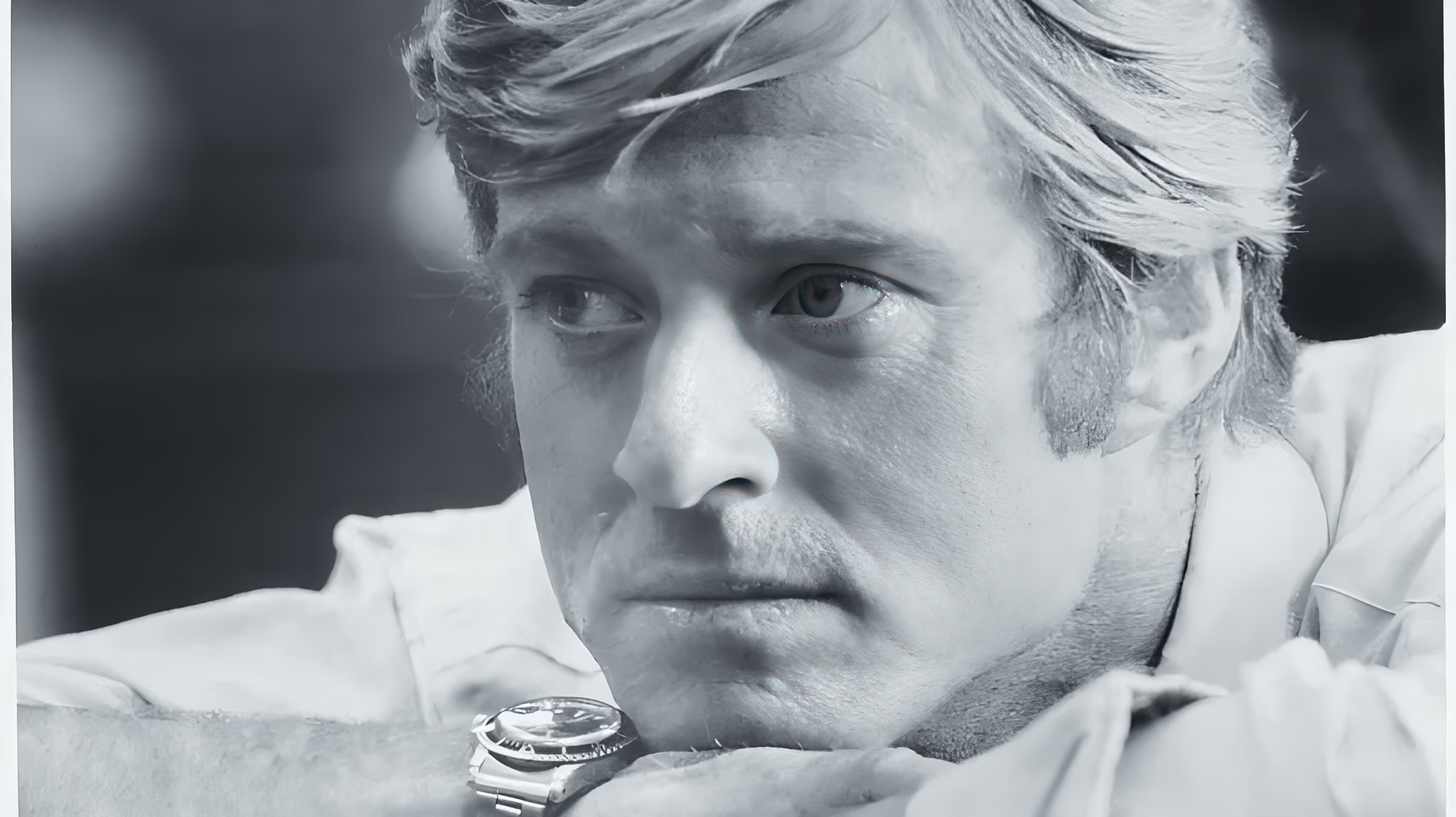
Hollywood has lost a quiet giant. Robert Redford—an actor, director, activist, and the driving force behind the Sundance Film Festival—has passed away, leaving a wide and lasting legacy that reaches far beyond his screen roles.
Remembering a Gentleman on and off Screen
Those who worked with Redford remember him as more than a leading man: he was a mentor who carried success with humility. Colleagues describe him as patient, warm, and generous—someone whose presence calmed a set and whose guidance helped younger performers find their footing.
“It was a dream come true to work on screen with Mr. Redford. Sometimes your heroes don’t disappoint—and he was every bit as great as I had imagined.”
Public figures and fellow artists echoed that sentiment. Hillary Clinton praised his commitment to the environment and the arts, calling him “a true American icon.” Scarlett Johansson recalled how Redford’s patience and generosity shaped her approach to the craft; director Ron Howard called him an “artistic game changer.”
A Career of Timeless Performances
Redford’s career began in the 1960s, transitioning from television to film with a natural ease that made him stand out. His breakout came in Butch Cassidy and the Sundance Kid (1969), and he went on to star in enduring films like The Sting (1973), All the President’s Men (1976), Out of Africa (1985), and Spy Game (2001).
What set him apart was a style that felt effortless: charisma held in check by subtlety. Whether in suspenseful political dramas or intimate character pieces, Redford brought nuance and a quiet intensity—qualities that made his characters feel lived-in rather than performed.
He also proved himself behind the camera. His directorial work culminated in Ordinary People (1980), which won the Academy Award for Best Picture and earned Redford the Oscar for Best Director—proof that his talent for storytelling extended well beyond acting.
The Sundance Revolution
Perhaps Redford’s most transformative contribution to film was his role in founding the Sundance Institute and the Sundance Film Festival. Launched in the early 1980s, Sundance became the most important showcase for independent voices in the United States and a launching pad for filmmakers who might otherwise have remained unseen.
The festival helped bring experimental, provocative, and deeply personal films into the mainstream, encouraging risk-taking and fresh perspectives. Over decades, Sundance nurtured directors who would go on to reshape modern cinema, offering them community, exposure, and the opportunity to be taken seriously by audiences and studios alike.
In its official statement mourning his death, Sundance described Redford’s vision as a movement that “has inspired generations of artists and redefined cinema in the U.S. and around the world.”
A Life Beyond Film
Outside of filmmaking, Redford was an outspoken environmentalist and activist. He used his influence to support conservation efforts, champion public lands, and advance access to the arts. He believed storytelling could do more than entertain—it could illuminate issues, provoke debate, and inspire change.
That blend of art and activism defined much of his public life. For Redford, movies were not only a craft but also a platform—a way to lift new voices and spotlight ideas that mattered.
Legacy and Final Thoughts
Robert Redford’s death closes a chapter in Hollywood history, but his work endures. His films remain watchable and resonant; Sundance continues to lift new filmmakers; and his advocacy for the environment and the arts stands as an example of how fame can be wielded responsibly.
He once said, “Film is not just about telling stories—it’s about creating change.” That credo guided his life. Redford didn’t simply make films—he helped make a world where independent voices could be heard.
Also Read:


[…] Robert Redford: Farewell to a Hollywood Legend and Pioneer of Independent Cinema […]
[…] Robert Redford: Farewell to a Hollywood Legend and Pioneer of Independent Cinema […]
[…] Robert Redford: Farewell to a Hollywood Legend and Pioneer of Independent Cinema […]