



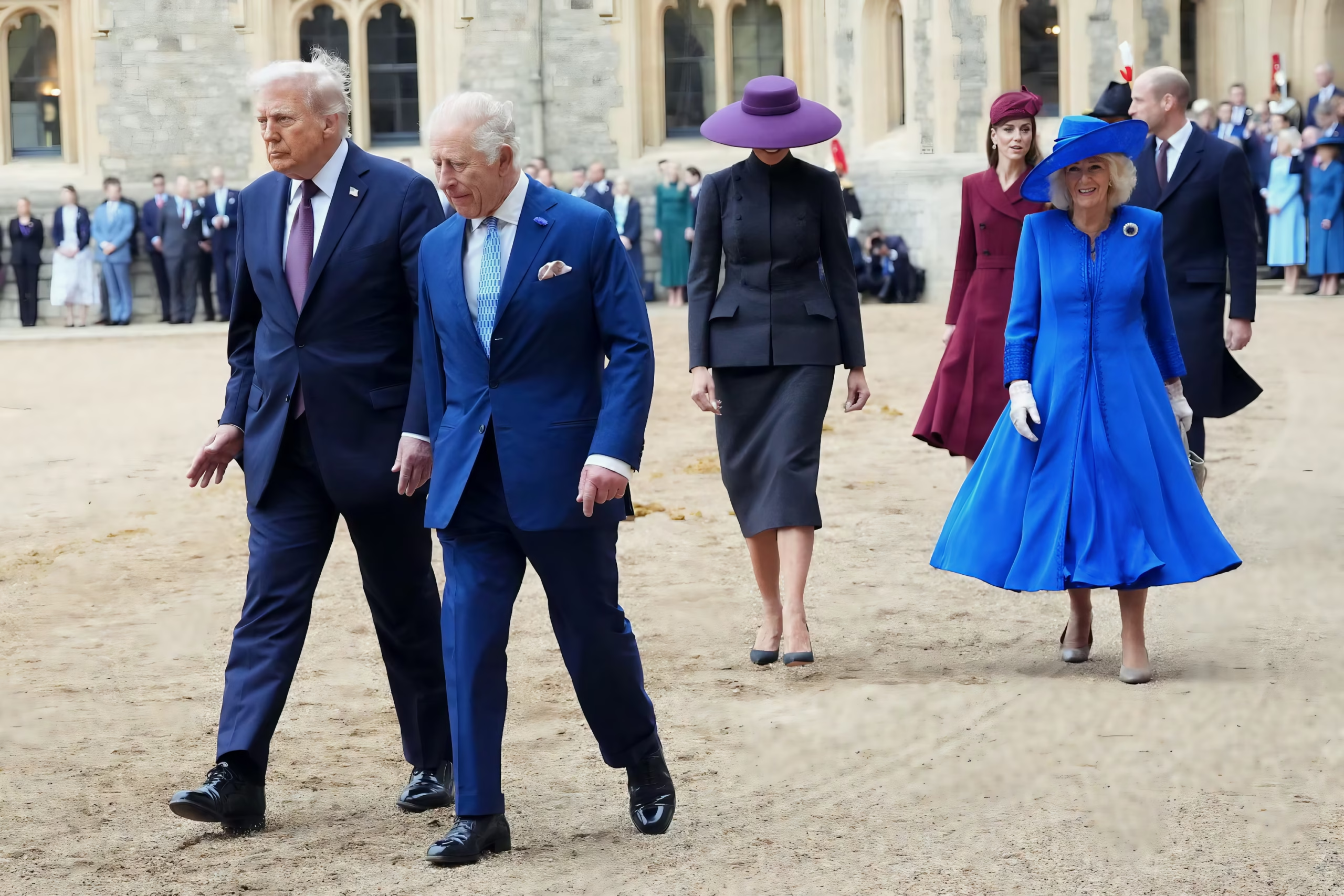
President Donald Trump’s recent visit to the United Kingdom has already made headlines, not only for its royal backdrop but also for the major economic promises attached to it. While the trip delivered a landmark technology pact between the two nations, it also opened the door to political challenges, public protests, and sensitive questions that could overshadow the expected benefits.
A $42 Billion Technology Investment
The most significant outcome of the visit so far is the announcement of a £31 billion ($42 billion) investment by global technology giants including Microsoft, Nvidia, Google, and OpenAI.
These investments are set to focus on three major areas:
- Artificial Intelligence (AI)
- Quantum Computing
- Civil Nuclear Energy
For the UK, this deal is more than just foreign investment. It positions the country as a serious player in the global tech race, potentially boosting research, innovation, and job creation. The promise of turning Britain into a hub for future technologies could be one of the biggest legacies of this visit.
Starmer’s Bet on Trade Talks
Prime Minister Keir Starmer is not stopping at the technology pact. He is also looking to refine the UK-US trade relationship. Since Brexit, Britain has struggled to strike major trade deals, and closer economic ties with Washington are seen as vital.
Speaking before his departure, Trump remarked, “They’d like to see if they could get a little bit better deal, so we’ll talk to them.” While the words seemed casual, they carried weight. Even a small tariff reduction or favorable clause could help the British economy, which is battling stagnation and rising public frustration.
Political Risks at Home
Despite the potential economic gains, Starmer faces serious political risks.
- Trump remains deeply unpopular among the British public, with polls showing high disapproval rates.
- Starmer himself is struggling with declining poll numbers.
- The UK economy is under pressure, with cost-of-living challenges and limited growth.
In such a climate, Starmer’s reliance on the pomp and glamour of a royal welcome for Trump could backfire. Many critics argue that optics alone will not convince voters who are increasingly skeptical about his leadership.
The Epstein Shadow Returns
The visit has also been complicated by the re-emergence of the Jeffrey Epstein scandal. Only days before the trip, Starmer dismissed Peter Mandelson from his post as Britain’s ambassador to Washington due to his past ties with Epstein.
Trump, too, has long faced uncomfortable questions about his association with the disgraced financier. With both leaders linked to figures in Epstein’s circle, the scandal risks resurfacing at the worst possible moment—potentially dominating headlines instead of trade or investment breakthroughs.
Protests Despite Tight Security
Windsor saw some of the strictest security operations in recent memory during Trump’s arrival. Yet, even heavy police presence could not prevent protesters from staging a dramatic stunt. Images of Epstein were projected onto Windsor Castle, drawing immediate global attention and leading to the arrest of four individuals.
The protest was a reminder that no matter how carefully orchestrated a state visit may be, public dissent and unresolved scandals can easily overshadow official messaging.
Economic Promise or Political Gamble?
The technology pact is undoubtedly a landmark achievement, but its true impact will take years to materialize. Critical questions remain:
- Will this investment translate into new jobs for British workers?
- How much of the money will actually stay within the UK economy?
- Will ordinary people see the benefits, or will it remain largely corporate-driven?
For Starmer, the answers to these questions are crucial. Without tangible results for the public, flashy investment figures may do little to restore faith in his government.
Diplomacy Meets Reality
At its core, the visit highlights the clash between political optics and practical results. The royal welcome and high-profile investment announcements are designed to project strength and optimism. But beneath the surface, Starmer is dealing with declining public trust, Trump’s controversial reputation, and the lingering shadow of Epstein.
If the visit yields lasting economic benefits, Starmer could use it as proof that his leadership delivers. But if controversies and protests dominate the narrative, the visit may instead deepen his political troubles.
Conclusion
Donald Trump’s UK visit represents a delicate balancing act for both sides. On one hand, it has brought forward a massive $42 billion technology investment that could shape the future of Britain’s economy. On the other hand, it has exposed Starmer to political risks, public criticism, and the resurfacing of scandals he would rather avoid.
For now, the visit remains a story of potential versus peril. The investments may secure headlines, but the real question is whether they will secure public trust. Until then, Trump’s royal welcome in Britain will be remembered not just as a diplomatic event, but as a moment that tested the limits of political strategy, economic ambition, and public patience.
Also Read:

