




Shillong Teer is one of the most fascinating games in India, blending the cultural roots of the Khasi tribe in Meghalaya with the excitement of lottery-style gaming. Unlike regular gambling, this game is unique because it is directly connected to archery, a traditional sport of the region. For many people in Meghalaya, Shillong Teer is not just a way of trying their luck but also a reflection of community tradition, livelihood, and entertainment.

Historical Background
The game originated decades ago when archery was played as a daily leisure activity by the Khasi tribe. Over time, this traditional practice evolved into a structured game, where people could participate by predicting the number of arrows hitting a target. In 1982, the Khasi Hills Archery Sports Association, consisting of more than 10 archery clubs, officially organized Shillong Teer. Since then, it has been regulated under Meghalaya state laws, making it one of the few legal betting systems in India.
How the Game is Played
Shillong Teer takes place daily (except on Sundays) at Polo Ground, Shillong. The format is very simple but highly exciting:
- Archers shoot around 50 arrows each in the first round.
- The total number of arrows shot usually ranges from 700 to 2000.
- The last two digits of the total number of arrows that hit the target become the winning number.
There are two rounds every day:
First Round at 4:15 PM
Second Round at 5:15 PM
Shillong teer
Players can place bets on numbers ranging from 00 to 99. If their chosen number matches the result, they win money based on fixed odds.
The Attraction of Shillong Teer
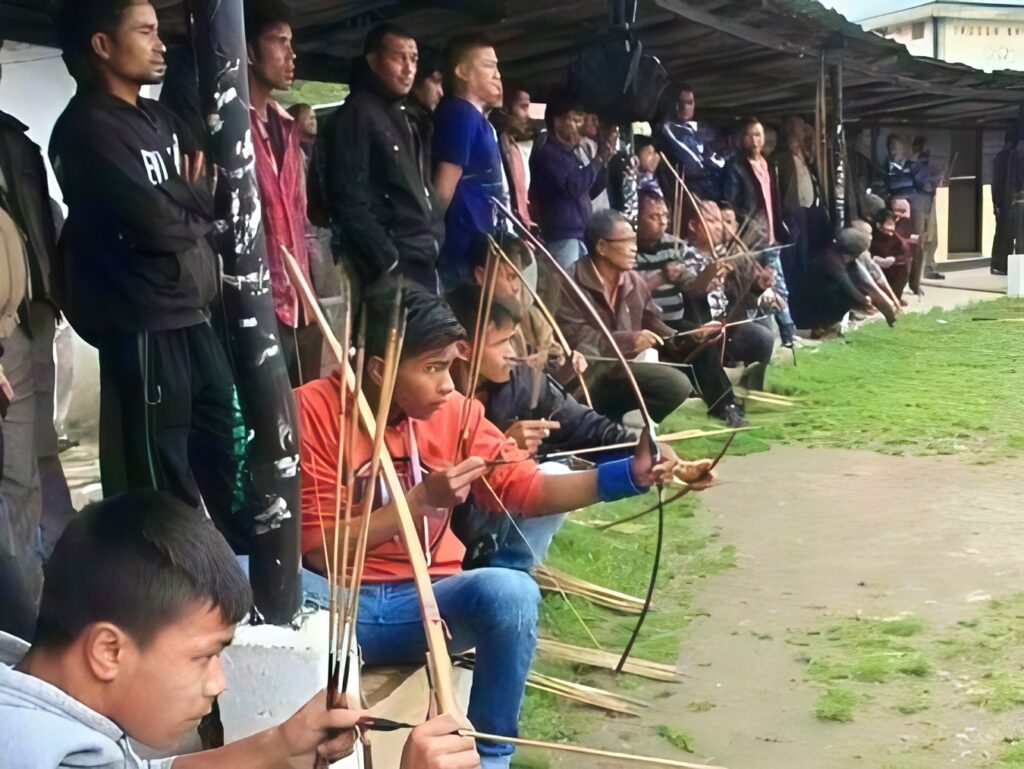
The uniqueness of Shillong Teer lies in the fact that it is not entirely a game of luck, nor purely a game of skill. Some people believe that predicting numbers is like solving a puzzle, while others see it as pure chance. Over the years, various theories, calculations, and “common numbers” have been developed by regular players who try to increase their chances of winning.
For local communities, the game is more than gambling—it provides livelihood to hundreds of people. From ticket sellers to archers, many depend on this system for daily income. Moreover, the Meghalaya government earns revenue through taxation on the game, which contributes to local development.
Legal and Cultural Importance
Unlike underground gambling, Shillong Teer is completely legal in Meghalaya under the Meghalaya Amusement and Betting Tax Act. The government regulates the system, which adds transparency and safety for participants. The cultural aspect is equally important; archery is considered a proud tradition of the Khasi tribe, and Shillong Teer helps keep that tradition alive in a modern context.
Shillong Teer and Its Popularity Outside Meghalaya
What makes Shillong Teer even more remarkable is its growing popularity outside the state. People from neighboring states, and even other parts of India, keep track of Shillong Teer results online. Social media groups, dedicated websites, and mobile apps publish daily updates, “common numbers,” and predictions. This online presence has turned Shillong Teer into a nationwide phenomenon.

Risks and Responsible Play
Like all betting-related games, Shillong Teer also carries risks. Many people lose money in the hope of winning big. This has led to debates about whether it promotes addiction. Experts advise participants to treat it as entertainment rather than a source of guaranteed income. Responsible play is essential for maintaining the cultural and social value of this unique game.
Conclusion
Shillong Teer stands out as a game where tradition meets modernity. Rooted in the cultural fabric of Meghalaya, it has evolved into a legal and widely popular system of lottery through archery. While it offers excitement and livelihood, it also reminds us about the importance of balance and responsible participation. For enthusiasts, Shillong Teer is more than just a lottery—it is a living tradition, a community-driven event, and a symbol of Meghalaya’s cultural richness.


Worth flagging this post as worth a careful read rather than a casual skim, and a stop at moveforwardnow earned the same careful approach, the few sites that warrant slower reading are sites I now treat differently from the daily content stream and this one has clearly moved into that elevated treatment category.
Glad the writer did not feel the need to argue with imaginary critics in the post itself, and a stop at leadvertex kept the same focused approach going, defensive writing wastes the reader time and confidence on positions that did not need defending and this post has clearly avoided that common failure.
Good post, the kind that respects the reader by getting to the point quickly without skipping the details that matter, and a short look at leadsprout confirmed that approach is consistent across the site which is rare to find online these days, definitely a place I will return to soon.
Most attempts at writing on this topic feel like they are missing something and this post finally identified what was missing, and a look at rankslate extended that diagnostic clarity, content that names what is wrong with adjacent treatments while doing better itself is content with both critical and constructive value and this site has both.
Thanks for a post that does not try to be funny when it is not the moment for it, and a stop at rivercovevendorroom maintained the same appropriate seriousness, knowing when humour helps and when it just signals desperation for engagement is a sign of editorial maturity that many blogs have not developed yet.
Thanks for the honest framing without exaggerated claims that the topic will change my life, and a stop at shopwithhappiness kept the same modest tone, restraint in marketing language signals trustworthiness and the writers here are clearly playing the long game by building credibility rather than chasing immediate clicks through hyperbole.
Liked the balance between depth and brevity, never too shallow and never too long, and a stop at freshcarthub kept the same balance going across the rest of the site, this is one of the harder skills in writing and the team here clearly has it figured out very well indeed across every page.
Started thinking about my own writing differently after reading, and a look at seopivot continued that reflective effect, content that influences how I work rather than just informing what I know is content with the highest kind of impact and this site has triggered some of that reflective influence today on me.
Good post, the kind that respects the reader by getting to the point quickly without skipping the details that matter, and a short look at seosurge confirmed that approach is consistent across the site which is rare to find online these days, definitely a place I will return to soon.
Picked up something useful for a side project, and a look at linkcrest added another piece I will incorporate, content that connects to specific projects I am working on is content with practical utility and the practical utility of this site is showing up across multiple posts I have read in the last hour or so.
During the time spent here I noticed the absence of the usual distractions, and a stop at rapidtrendzone extended that distraction free experience, content that does not fight my attention with pop ups and modals and aggressive prompts is content that respects me and this site has clearly chosen the respectful approach throughout.
A welcome contrast to the loud takes that have dominated my feed lately, and a look at seocove extended that calm voice, content that arrives without yelling has become unusual in the modern attention economy and this site is one of the few places I have found that consistently delivers without raising its voice.
A piece that ended with a clean landing rather than fading out, and a look at makepositivechanges maintained the same crisp conclusions, endings that resolve rather than dissolve are a sign of careful structural thinking and this site has clearly invested in how its pieces conclude rather than letting them simply run out of energy.
Worth recommending broadly to anyone who reads on the topic, and a look at linkstreet only confirms that, the rare combination of accessibility and depth in this site makes it suitable for both newcomers and people who already know the area which is hard to pull off in any blog format today and rarely managed.
Top quality material, deserves more attention than it probably gets, and a look at rankmotion reflected the same effort across the site, a hidden gem in the modern web where most attention goes to whoever shouts loudest rather than whoever actually delivers the best content for their readers without much marketing fanfare.
Reading this slowly because the writing rewards a slower pace, and a stop at linkcipher did the same, the pace at which I read content is something I now use as a quality signal and writing that earns a slower pace earns my attention as a reader looking for substance these days.
Probably this is one of the better quiet successes on the open web at the moment, and a look at seocipher reinforced that quiet success quality, sites that are doing well without making a noise about doing well are the sites I most respect and this one has clearly chosen the quiet success path consistently throughout.
Came away with some new perspectives I had not considered before, and after blurchip those ideas felt more complete, the kind of content that stays with you a little while after reading rather than slipping out the moment you switch tabs and move on with your day to whatever comes next.
Worth recommending broadly to anyone who reads on the topic, and a look at yourdailyvalue only confirms that, the rare combination of accessibility and depth in this site makes it suitable for both newcomers and people who already know the area which is hard to pull off in any blog format today and rarely managed.
mostbet ставки на баскетбол Кыргызстан [url=https://www.mostbet20581.help]https://www.mostbet20581.help[/url]
Comfortable reading experience throughout, no jarring tone shifts and no awkward formatting, and a look at trustedshoppinghub kept that smooth feel going, the kind of editorial polish that goes unnoticed when present but glaring when absent is something this site has clearly invested in across the broader content as well which deserves recognition.
Just enjoyed the experience without needing to think about why, and a look at sprygain kept that effortless feeling going, sometimes the best content is invisible in the sense that you forget you are reading until you reach the end and realise time has passed without you noticing it pass naturally.
Honestly this was a good read, no jargon and no padding, and a short look at octflag kept that same feel going which I really appreciated, the writer clearly knows the topic well enough to explain it without hiding behind big words or filler that often gets used to seem clever.
Will recommend this to a couple of friends who have been asking about this exact topic, and after cloudpetalstore I have even more reason to do so, the kind of site that earns word of mouth rather than chasing it through aggressive marketing or paid placements is always a treat to find online.
Bookmarked the page and the homepage too because clearly there is more to explore here, and a quick stop at createimpactnow only made that more obvious, this is the kind of place I want to dig through over a weekend rather than rushing through during a coffee break tomorrow morning before getting back to work.
Felt like the post had been edited rather than just drafted and published, and a stop at bravoflow suggested the same care across the site, the difference between edited and unedited content is enormous for the reader and this site has clearly invested in the editing pass that most blogs skip entirely which really does show up.
Now setting this aside as a model of how to write thoughtfully on the topic, and a stop at pureleafemporium extended that model status, content that becomes a reference for how a kind of writing should be done is content with influence beyond its own readership and this site is reaching that level for me clearly today.
Compared to the usual results for this kind of search this site stands well above the average, and a quick visit to leadcrest kept the standard high, you can tell within seconds whether a site is going to waste your time or actually deliver and this one clearly delivers without any false starts.
Working through this site has been a small antidote to the shallow content that fills most of my reading time, and a stop at bestdailyhub extended that antidote function, sites that quietly improve the average quality of my reading by being themselves are sites worth supporting through return visits and recommendations consistently.
Started imagining how I would explain the topic to someone else after reading, and a look at modernvaluecollection gave me more material for that imagined explanation, content that improves my own ability to discuss a topic is content that has actually transferred knowledge rather than just decorating my screen for a few minutes.
Generally my attention drifts on long posts but this one held it through the end, and a stop at flagtag earned the same sustained focus, content that defeats my drift tendency is content with substantive pulling power and this site has demonstrated that pulling power across multiple pieces in a session that has now run quite long actually.
I learned more from this short post than from longer articles I read earlier today, and a stop at premiumflashhub added even more useful detail without going off topic, this site clearly knows how to keep things focused without sacrificing depth which is a hard balance to strike for any writer.
A clear case of writing that does not try to do too much in one post, and a look at findamazingoffers maintained the same scoped discipline, posts that try to cover too much end up covering nothing well and this site has clearly chosen scope discipline as a core editorial principle which shows up clearly in what I read.
Strong recommendation from me, anyone curious about the topic should make time for this, and a look at onyxhold only sharpens that recommendation further, the kind of resource that holds up against careful scrutiny rather than crumbling at the first critical question is rare and worth pointing other people toward when the topic comes up.
Reading this gave me something to think about for the rest of the afternoon, and after smarttrendstore I had even more to mull over, the kind of post that lingers in the background of your day rather than evaporating immediately is genuinely valuable in an attention economy that punishes depth rather than rewarding it.
Probably going to mention this site in a write up I am working on later this month, and a stop at nightfallmarketplace provided more material for that potential mention, content worth referencing in my own published work rather than just personal reading is content with the highest endorsement level and this site has earned that endorsement.
Started smiling at one paragraph because the writing was just nice, and a look at uniquegiftcollection produced a couple more such moments, prose that produces small spontaneous reactions in the reader is doing more than just transferring information and the writers here are clearly hitting that level fairly consistently throughout pieces.
Bookmark moved to my permanent reference folder rather than the casual maybe later folder, and a look at boldlume earned the same upgrade, the distinction between casual interest and lasting reference is something I track carefully and very few sites cross that threshold but this one did so without much effort apparently.
Found the writing surprisingly fresh for what is by now a well covered topic, and a stop at velvetfieldmarket kept that freshness going across the related pages, original perspective on familiar ground is hard to come by and this site has clearly earned its place in the conversation rather than just rehashing old ideas.
Worth saying that the post fit naturally into a rhythm of careful reading, and a stop at modernvaluecollection extended the same rhythm, content that pairs well with how I actually read rather than demanding a different mode is content well calibrated to its likely audience and this site has clearly thought about that consistently.
Worth saying that the quiet confidence of the writing is what landed first, and a look at bravoflow continued that quiet quality, confident writing without the loud display of confidence is a rare combination and this site has clearly developed both the knowledge and the editorial restraint to land that combination consistently.